Thursday, November 23, 2006

Pret A Snorter

Nobody is feeling more emotional about the
sad death of Robert Altman
earlier this week than Lindsay Lohan. Lohan, who was directed by Altman in his last film, A Prairie Home Companion, issued her very own statement yesterday responding to the news of his passing. By "her very own statement, I mean that she spewed something into the public domain without first running it by her publicist. Or her spellcheck. Or that grammarcheck function which turns its nose up at all my sentences and tells me that they're mere fragments and should be revised. Don't you have that, Lindsay? The fragment-finder? You could use it, for starters, to locate the fragments of coke that still linger in your nostril-hairs after the three lines you must have blown before writing this searingly elegaic, AA-speak-infused prose in the back of a cab while Calum Best rifled through your wallet:


"I would like to send my condolences out to Catherine Altman, Robert Altmans wife, as well as all of his immediate family, close friends, co-workers, and all of his inner circle.

"I feel as if I've just had the wind knocked out of me and my heart aches.

"If not only my heart but the heart of Mr. Altman's wife and family and many fellow actors/artists that admire him for his work and love him for making people laugh whenever and however he could..

"Robert altman made dreams possible for many independent aspiring filmmakers, as well as creating roles for countless actors.

"I am lucky enough to of been able to work with Robert Altman amongst the other greats on a film that I can genuinely say created a turning point in my career.

"I learned so much from Altman and he was the closest thing to my father and grandfather that I really do believe I've had in several years.

"The point is, he made a difference.

"He left us with a legend that all of us have the ability to do.

"So every day when you wake up.

"Look in the mirror and thank god for every second you have and cherish all moments.

"The fighting, the anger, the drama is tedious.

"Please just take each moment day by day and consider yourself lucky to breathe and feel at all and smile. Be thankful.

"Life comes once, doesn't 'keep coming back' and we all take such advantage of what we have.

"When we shouldn't..... '

"Make a searching and fearless moral inventory of yourselves' (12st book) -everytime there's a triumph in the world a million souls hafta be trampled on.-altman Its true. But treasure each triumph as they come.

"If I can do anything for those who are in a very hard time right now, as I'm one of them with hearing this news, please take advantage of the fact that I'm just a phone call away.

God Bless, peace and love always.

Thank You,

"BE ADEQUITE"

Lindsay Lohan


"Be Adequite?" Be Adequite? It's my new favourite line. That, and the snark of one commenter on defamer: "BE LITERITE!"


Defamer

Read More...

Wednesday, November 22, 2006

A Little Piece of Heaven


Here follows heavy advertorial for the sheer, lucid, glorious BRILLIANCE of tuppenceworth.ie's takedown of the laziness, bigotry and vacuousness of the Sunday Independent. This has needed doing for a long, long time, and that it has been done so thoroughly and so clear-headedly just makes it all the sweeter. Drool.

Link via Bloggorah, who smell revolution.

update: Tuppenceworth's Paper Round is comprehensive, taking in the Examiner, Herald, the Tribune and a Friday edition of the Times, and deserves a fuller perusal. It's just the beginning of the road for this project, and already looks very promising. Nor is it confined to the realm of satire, as I previously thought; tuppenceworth is deadly serious about this, as his research and the application of his criteria (witness: where lies the difference between PR and advertorial? journalism and opinion?) show. Not that satire can't be deadly serious, but, focusing on one area, satire generally runs out of steam. This is different.

Read More...

Saturday, November 18, 2006

My Big Fat Scientology Wedding

Something panfried, something blue... I've got it all sorted out.


No cats were harmed in the making of this post. A pan was, though, and will probably never again be usable.

Anyway, to celebrate today's happy event, here's a little clip for y'all from way back in those heady first days of Katie's contractual agreement: the David Letterman interview, conducted just after Tom's couch-jumping stunt on Oprah. Poor Katie was but a novice at the scientology/beard lark at this point (and hadn't started wearing awful satin blouses everywhere, either), and was clearly having trouble remembering the lines she'd been fed by Tom's handlers: notice how panicked she gets when Letterman asks her for anything like a concrete detail. Where did they meet? Shit! She can't remember the official answer to that one. Well, never mind, she'll just waffle her way through it, and hope it works....

It doesn't.


PS, my favourite detail out of all of today's coverage: La Dolce Vita, the film alluded to in so many headlines about the wedding and the paparazzi attention it has garnered, is apparently also the most hotly-anticipated title of the year. In gay porn.

Read More...

Saturday, November 11, 2006

Another Distraction


Where have you been all my life, Critical Mick? And "when your anger is focused" (whatever the hell that means), could you possibly be "the most talented writer at work in Ireland today"? Bafflingly, you seem to think this title might already be claimed, what with chancers like Hugo Hamilton, DBC Pierre, Eugene McCabe and John Connolly daring to scribble on the old sod. (Oh, and some women too. But not many.)
What I'm trying to say is: read CM. He does things with reviews I never thought possble. Vernon God Little becomes an episode of South Park. Claire Kilroy's first novel inspires a sort of father/daughter/daughter's friend/UCD Arts Block love affair. The Master becomes a send-up of every panel discussion I've ever listened to, or been on, or had anxiety dreams about. And as for what he does with Utterly Monkey....just read it.

Read More...

Tuesday, November 07, 2006

Times Select

TImes Select, the online part of the New York Times which is generally hidden behind a subscription wall, is free all of this week. It's worth a look if you're in search of yet another form of distraction, and with the mid-terms today, this is a good week to be able to avail of it.
One piece I'd recommend is this article on a cache of over 800 newly discovered Dorothea Lange photographs, from the period in the 1940s when tens of thousands of Japanese-Americans were rounded up and sent to internment camps on the west coast of the U.S. as the war with Japan escalated. Lange's photographs were impounded by the government soon after they were taken and have been in the National Archives until now; W.W. Norton has just published 100 of them in a book called Impounded. The book's co-editor (with Linda Gordon) describes the kind of America this was, as families were ordered at gunpoint into horse stalls and shacks, where they were interned, in many cases for years afterwards, in the intense California heat. An editorial from the L.A. Times read: “A viper is nonetheless a viper wherever the egg is hatched — so a Japanese-American, born of Japanese parents — grows up to be Japanese, not an American.”

Lange had actually been employed by the government to document the process, presumably to show that detainees were not being mistreated. But at most of the locations she visited, she found her work being censored by government officials even as she tried to create it; at one camp, she was forbidden from taking photographs of wire fences, watchtowers, armed guards or anything like that. The photographs then disappeared almost as soon as the commission was completed.


To my shame, this is a period of history of which I only really became conscious last year, when I was researching the life of Isamu Noguchi, one of the most famous sculptors of the 20th century, who was Japanese-American. By the 1940s, he lived an artist's life in New York, had designed many high-profile pieces including the entrance to the Rockefeller Centre, and was a revered collaborator with the choreographer and dancer Martha Graham. In response to the growing anti-Japanese sentiment in the U.S., Noguchi established a group of writers and artists calling for democracy and travelled to California to oversee a documentary about the internment. He left California lest he himself be interned, but when he found, back in New York, that his efforts to influence government officials were failing, he decided to become a voluntary internee at the Poston camp, located on an Indian reservation in Arizona. He designed parks and recreational areas within the camp - including, tellingly, a cemetery - but soon realised that officials had no intention of implementing them. And when he applied for release, he was deemed a "suspicious person" due to his involvement with the artists for democracy group. He was forced to remain on for several months, and investigated by the FBI after his eventual release.

I was shocked to learn that this had happened to Japanese-Americans, in their hundreds of thousands, in the U.S. Looking at the country today, of course, I don't know why I was shocked. Noguchi was one of the lucky ones; he returned to his life in Greenwich Village, to exhibitions, acclaim and friendships with influential artists and the celebrities of the time. Other Japanese-American internees had less to look forward to. As the essay accompanying Lange's photographs makes clear, both the lives led by internees within the camps and the lives to which they returned after their release were often tragic.

Read More...

Saturday, November 04, 2006

My Editor

He's a hard taskmaster.

Read More...

Thursday, November 02, 2006

Doherty gets Moss's ring stuck on his finger. No, I didn't make that up.

The latest from the Kate Moss/Pete Doherty farce...

I still want to believe this guy is an elaborate KLF hoax. But even they couldn't dream up half the stories that come out about him.

In other news, how much more closely can Kate Moss come to resemble a wig-wearing Ian Beale before she is no longer considered a supermodel? Just wondering...

Read More...

Wednesday, November 01, 2006

The Richard Ford Trilogy, NYT Style

A Seattle reader of the New York Times has done what has needed to be done for a long time: he has socked it to the newspaper over its odd policy of often reviewing the same book twice, once on the weekday pages and once in the Sunday review. In this case, he's talking about what he saw as excessive coverage of Richard Ford's new novel, The Lay of the Land. The novel got two reviews, a reasonably poor one from Michiko Kakutani, and a more glowing specimen from the paper's film critic A.O. Scott. In between the two, the Arts section carried a front-page feature on Ford and the travels he undertook as part of his book research. At this stage, the reader wondered whether Ford had an "in" with the newspaper.

Publishing a feature as well as a review seems reasonable to me, especially in the case of a book as eagerly awaited as this one, which is the last in Ford's acclaimed Frank Bascombe trilogy. But the policy of double-reviewing has never made sense to me, particularly since the reviews are often in complete opposition to one another. Yes, there's a lot to be said for diversity of critical voices on a new title, but not in this form. Either publish one review and have another critic respond to that review, or publish one review full stop. Or, publish one review and allow the opportunity for another perspective on the book to come across in the course of a feature or interview. But publishing two reviews? Get off the fence. And use the weekday pages for other books. It's not like there aren't enough of them waiting to be reviewed.

Read the complaint, and the borderline-sniffy response from the NYT's public editor, here. (Registration may be required, but it's free.)

I'm off to my first class with Orhan Pamuk. Up for discussion is Mann's Tonio Kroger. Report later on...

Read More...

Tuesday, October 31, 2006

Things Learned in a Poetry Class

note: the second half of this post is supposed to be hidden behind a clickable "read-on" link, but blogger's "span/fullpost" etc html doesn't seem to be working anymore. Does anybody know the story? Any alternatives? Just looking at this solution makes me want to go back to pen and paper. Until then, sorry for the length of this post.

• In 1971, while rushing to dinner with his wife, the French poet Jean Follain (well discussed here), died after being struck by a car on a Paris corner. It was the exact corner on which his father had been knocked down and killed years previously.
•
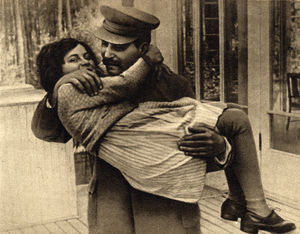
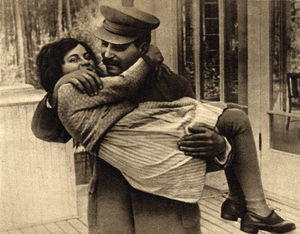
In 1970, Svetlana Alliluyeva Stalina (seen, right, aged nine with her devoted daddy Joseph Stalin), received an invitation from the widow of the architect Frank Lloyd Wright. Stalina had recently defected to the U.S., causing uproar in the USSR for her denouncement of her father's regime and the publication of her memoir Twenty Letters To a Friend. Wright's widow invited her to come and visit her at Taliesin West, Wright's winter home and school in the desert of Arizona. A mystic, she was convinced that Stalina was a spiritual replacement for the daughter she had lost in a car crash, a woman also called Svetlana, who had been married to Wright's chief apprentice, William Peters. Stalina visited Arizona and had agreed within weeks to marry Peters. Stalina now lives in a retirement home in Wisconsin.
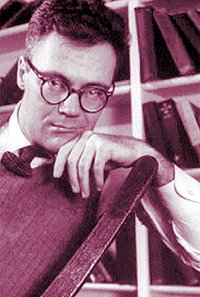

• Robert Lowell taught an undergraduate workshop in poetry at Harvard in the early 1970s. In lieu of the usual workshop approach of reading and/or listening to the poems of participating students, Lowell preferred to read aloud from a battered anthology of poems he admired. Every so often he would turn to the students, with ten minutes left to go before class ended, and ask them to read a poem. They were mostly eighteen years old, and understandably reluctant to follow in the wake of Marvell, Browning and Yeats. One of the students took a shine to an attractive girl in the class. One day, after class had ended, he asked her out. She walked away without speaking to him. A classmate filled him in on his faux-pas: he had just propositioned the Lowell girlfriend of that class. There was one in every class. Also, there was Elizabeth Hardwick, the wife he was in the process of leaving, and Lady Caroline Blackwood, the wife he was in the process of acquiring. Lowell was eccentric, but generous. He invited the whole class out to a meal in Cambridge. They all went. Meanwhile, Lowell went to the airport and took a flight to London, where he lived for pretty much the rest of his life.

• Something I remembered tonight about Lowell: when he died of a heart attack in 1977 in the back of a New York cab, he was returning from JFK airport, having flown there from Dublin. There, he had finally ended his marriage with Blackwood, who was an heir to the Guinness fortune and lived on the family estate at Castletown House, Co. Kildare. When Lowell died, he was on his way back to Hardwick, who lived in Manhattan. He died with a painting in his arms. It was a portrait, now famous, of Blackwood, by her previous husband Lucien Freud. I think I remember hearing somewhere that he had robbed it from Castletown's walls. But maybe I'm imagining that bit.
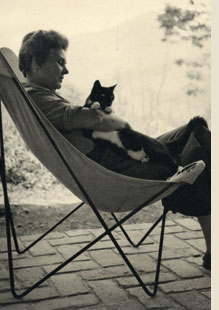
• Teaching in Harvard at the same time as Lowell was his great friend, the poet Elizabeth Bishop. His classes were taught in a penthouse with a stunning view of Cambridge; hers were taught in a damp basement. She was calmer than Lowell, which wouldn't have been difficult. She grew exasperated with her students, who were desperately self-conscious about their readers, their potential readers, their imagined readers, and about what all these people might say about what had been written or appropriated or revealed, when in fact their poems had, as of yet, no readers at all save for themselves and their teachers. She slammed a notebook down on the desk one day and said to her students, look. When you begin work on a poem, the thoughts that go into that and the material that goes into that process forms a bridge between you and hte page. And when your reader reads the finished poem, the poem forms a second bridge between the page and them. And your readers will never see the first bridge. Only the second one. So stop thinking about what your readers will think of your material. They will never be on that bridge.

• In French graveyards - at least in some French graveyards - there is a symbol for the grave of a suicide.

• In 1910, Houdini was the first man to fly an airplane successfully in Australia. As well as flying, he performed. During one performance in Melbourne, he jumped, bound in chains, from a high bridge into a river. Moments later, he resurfaced, free of his chains, and saw in the water beside him something that nearly caused him to drown.
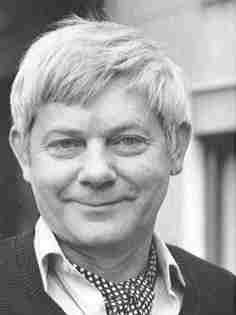
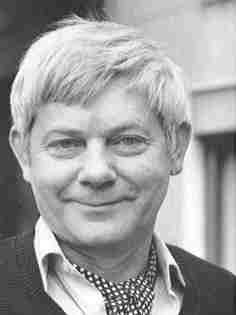
• The Polish poet Zbigniew Herbert (right), who would have been 82 this week had he lived, was a descendant of George Herbert, somehow.

• On the last three points, learn more below. You'll have to read some poems. They are worth reading. I suppose I shouldn't really be printing them in full. But I am.


Outside Perpignan in Heavy Rain from In the Year of the Comet (1992) by Nicholas Christopher

The trees sway darkly
along the black wall with its vines.
For shelter, a cat squeezes between the steel bars over a window.
This is where the caretaker lives,
catty-corner to the cemetery,
with a door the color of stone.

We've just descended the mountains,
windshield wipers slapping mud
while we talked about the acrobat
who was in the papers in Barcelona
yesterday; how he attempted
to perch blindfolded on the highest
steeple of the Gaudí cathedral.

Through the gate, in the first
row of gravestones, a statue
depicts a young woman
raising her hand to her face:
the mortuary sign for a suicide.
Is she about to touch her forehead?
to tear out her hair?
to dig her nails into her cheek?
to stifle a cry
or make the sign of the cross?

In this life which is the only life
it is a gesture we see every day.
You say someone in a position
to know told you it's easy
to learn about these things
without ever learning anything at all.
Without ever running out of questions.
When that acrobat fell in bright sunlight,
did all the women in the street raise
their hands to shield their eyes?


From 5º (5º and Other Poems, 1995) by Nicholas Christopher

In 1910 Houdini was the first man to fly
an airplane successfully in Australia.
It was a biplane, purchased in France,
which he took to Melbourne on a ship.
During the two-week voyage,
he was continually seasick,
yet spent hours in the cargo hold,
poised at the controls of his plane.
He had HOUDINI painted on the fuselage
and wings in red and gold.

In Melbourne he gave two performances nightly.
He made a full-grown elephant disappear.
He caused a man's top hat to fill with coins.
He had himself submerged, straitjacketed
and handcuffed, in a tank of ice water.
Then he left his wife at their hotel and hurried
to a desert airstrip to sit in his plane.
He kept this up for weeks, studying charts,
waiting for the weather to clear.

On the evening of February 18th, a crowd
watched him leap manacled from Queen's Bridge
into the muddy waters of the Yarra River.
Moments later, a dead man floated to the surface.
The onlookers panicked, and when Houdini
reappeared, he was so startled to see
the corpse that he nearly drowned
and had to be hauled
into a rowboat by his attendants.

Finally, on March 16th, under cloudless skies,
he took off in his plane, circled, and landed.
He completed three flights that day,
covering seven miles at an altitude of ninety feet.
At each stop, bigger crowds cheered him on.
In April, he made four more flights
before crashing outside Sydney on the 22nd.
He walked away from the wreckage unscathed
and told his wife he had not slept in a month.

"I now seem to have lost the habit," he added.
To his journal he confided that history
would remember him, not as a magician,
but an aviation pioneer.
During the voyage home, he was seasick.
He never flew again.


Remembering My Father from Mr. Cogito (1974) by Zbigniew Herbert
Trans. J & B Carpenter

His face severe in clouds above the waters of childhood
so rarely did he hold my warm head in his hands
given to belief not forgiving faults
because he cleared out woods and straightened paths
he carried the lantern high when we entered the night.

I thought I would sit at his right hand
and we would separate light from darkness
and judge those of us who live
- it happened otherwise

a junk-dealer carried his throne on a hand-cart
and the deed of ownership the map of our kingdom

he was born for a second time slight very fragile
with transparent skin hardly perceptible cartilage
he diminished his body so I might receive it

in an unimportant place there is shadow under a stone

he himself grows in me we eat our defeats
we burst out laughing
when they say how little is needed
to be reconciled

Read More...

Thursday, October 26, 2006

How to Look Good in Photographs

1. chin up
2. hand on hip
3. three hours of make-up and a day of intensive photoshop love (hey, it worked for Suri Cruise)

This is from a new Dove ad. Remember it the next time you embark on a fit of self-hatred while flicking through Vogue...

Read More...

Master of Tact Returns to the Airwaves

Goodbye, Con Murphy. It was fun while it lasted. You didn’t make racist,homophobic, sexist or just plain stupid remarks, we didn’t have to listen to your unprofessional blundering around issues of age or sex or technology nor anything else (note to Tubridy: when you want to know somebody’s age, just ask them. Stop this whole faux-polite “um, um, may I know what general age group you are in, if you don’t mind…um, haahaa, just, well you know what I mean,” etc) and you had clearly actually read the books (for once, something that was not a what-ho British book about boys’ hobbies! Joy!) and watched the films and whatnot up for discussion. (Though you could have talked a bit more about Dallas during that John Doyle interview; that would have made me really happy.) Now Turgidy is back; curse those advances in tonsilitis medicine. He’s interviewing Kevin Myers at the moment, and has already made him sound like a charming, subtle, intelligent speaker by comparison.("predilection for women", aargh, "I was an ardent young man", aaaaarrrrgh, "the female thing", stop it, oh my god Turgidy just spat out the word "threesome", now he’s talking about a woman “doing what she does on her own”, which is his euphemism for masturbation; I want to die). At least Jane Ruffino is coming on soon, and she is going to kick his tweed-jocked arse.

I mentioned Dallas, didn’t I? So that’s justification enough for this…

Read More...

Friday, October 13, 2006

Genius


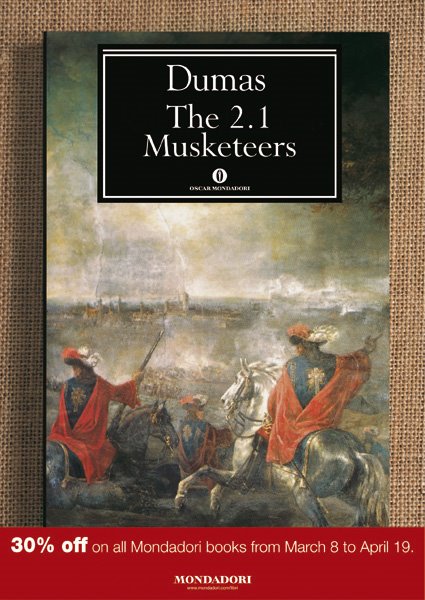
I'm stealing this straight from Gawker, but it's too good not to steal. These images are from a campaign devised by Saatchi & Saatchi for the 30% off sale at the Italian English-language bookstore Mondadori earlier this year. Thinking about how this campaign might have advertised Irish novels, there aren't many contenders. Flann O'Brien seems to lead the way where numerical titles are concerned. I wonder how At Swim 1.4 Birds and The 2.3rd Policeman sold during the Mondadori sale. Better than The Barrytown Dilogy, I'd imagine. Or Paddy Clarke Ha Ha h...

Never mind.

Read More...

Tuesday, October 03, 2006

What James Wood Does Like to Read

I took a seminar with James Wood this semester. It's over now, even though the semester has barely started, which makes me feel gloomy, because he was a brilliant teacher; passionate and insightful as a reader of Bellow (the stories), Dostoevsky (Notes from Underground), Chekhov (stories) and Woolf (To the Lighthouse) and adept at talking about these works not just from the perspective of criticism, but of craft. He also had a very entertaining story about his own doppelganger, and about the Dostoevskian saga which ensued for him following the intervention into his life of that person, who shared his name and his occupation, and, for a while, showed up at every turn for Wood, writing letters, reviews, and even blurbs. It reminded me strongly of Paul Auster's novella City of Glass, but probably because that, in itself, is one big Dostoevskian trope.
Anyway, after the last class, Wood took some time to talk about "literature in general" and to take any questions the class had on this subject, and of course somebody asked the question that was on everybody's lips ("Which books have you liked in recent years?"), albeit phrased more delicately than others might have put it, given Wood's no-nonsense tack as a critic ("Is there anything you've ever liked?") And, while Wood was happier to give names (Spark, Sebald, Bellow, Coetzee, and the earlier Roth) than titles, there were a few that he singled out:
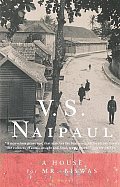
Amit Chaudhuri's collection A Strange and Sublime Address(1991)V.S. Naipaul's novel A House for Mr. Biswas (1961) Henry Green's novel Loving (1945)(see Wood’s TLS article on Green, from the TLS last January).

Naturally, I haven't read any of them; this is the first I've heard of Green, in fact. His novel sounds intriguing, set as it is among a bunch of servants in a castle in Ireland during WWII. I didn't get to ask Wood what he thought of Bowen, or of any other Irish writers; his slow, somewhat agonised but still fascinating revelation of his favourites was then intercepted by a bland question about marketing and the young writer (snore), so there were revealed no more than these. But at least it saved me from yet again displaying my provincial tendencies for all to see.

Read More...

Monday, October 02, 2006

Welcome to the BQE, Bitch

Sometimes we forget that we live in Brooklyn, and allow ourselves to be deluded into thinking that we've been transported into some less crowded version of the Village, except with fewer tourists, fewer strollers, better bars and lower rent. And then some actual CRIMINALS steal a van and set it on fire outside our window! At six o'clock in the evening! On Yom Kippur!! (Ok, ok, the last bit was just overkill.)


Man, we live an edgy life. I'm surprised some gangsta types aren't vying to shoot me in the head even as I write this. It must be the sound of the first ever JK Ensemble, streaming live from the wireless, that's saving me. By tomorrow, I expect to hear a playlist consisting of Bonnie Prince Billy and improvisations on Bach banging through the car windows of all the young men cruising (but not in the Village sense of the word) out there. And then, in a nice piece of symmetry, JK will open Wednesday's show by spinning the current boom-car fave, "You Already Know I Want to Fuck You (Fuck You, Fuck You)". And Ana Leddy will finally realise the enormity of her mistake.

Read More...

Sunday, October 01, 2006

Barry Egan, Journalist of the Year


1. From today's Sindo, a primer in thoughtful, balanced, consistent prose:

IT'S official. Marian Keyes couldn't leave the house if they did away with hair dyes. "I would kill myself," she insists. (Mercifully, Marian was unsuccessful in a real suicide attempt in 1994.)


2. Conversation Chez Empire State View upon the reading-out-loud of the above paragraph earlier today:
ESV: "...in a real suicide attempt in 1994."
A: "Jesus Christ!"
(cue two minutes of hysterical laughter and one terrified kitten)
ESV: I'm going to put that on my blog.
A: Do.
(ESV types and mutters)
ESV: But I need a picture to go along with it, and all I get when I type in "Barry Egan" is Adam Sandler's character from Punch Drunk Love. I need a greasy, ginger "celebrity"...
A: Use Mick Hutchence.
ESV: Who?
A: Mick Hutchence.
ESV: Whose "real suicide attempt in 1994"* was successful?
A: Oh yeah.
ESV: Hucknall.
A: That's the one.
Max the Kitten: Where did you hide that roast chicken, youse bastards?

*yeah, yeah, 1997, whatever.

Read More...

Tuesday, September 26, 2006

Clinton Uncut

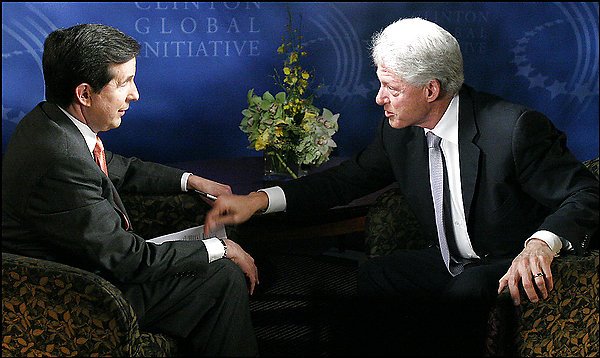
Apparently Fox News isn't too happy that there are full clips of the Fox News Sunday interview with Bill Clinton, in which Clinton, faced with questions about the Democrats' actions in the run-up to 9/11, gives Chris Wallace's smug mug something to chew on. Fox has pulled "unauthorised" (read: unedited-for-maximum-possible-Republican-advantage) clips from Youtube, and has authorised only online versions which cut straight from Wallace's polite, measured introduction to Fox's outraged headlines ("Clinton Freaks Out", etc). We can't be seeing that interview with our own eyes, because then we might make our own mind up on a few things. So Fox has to protect us. While Fox is busy doing that, you can see the video of the full interview on google videos. And, since youtubers are uploading copies of the interview faster than Fox can get to them, you can still watch it here.
Read More...

Sunday, September 24, 2006

Photos from Secret Project Robot, Williamsburg

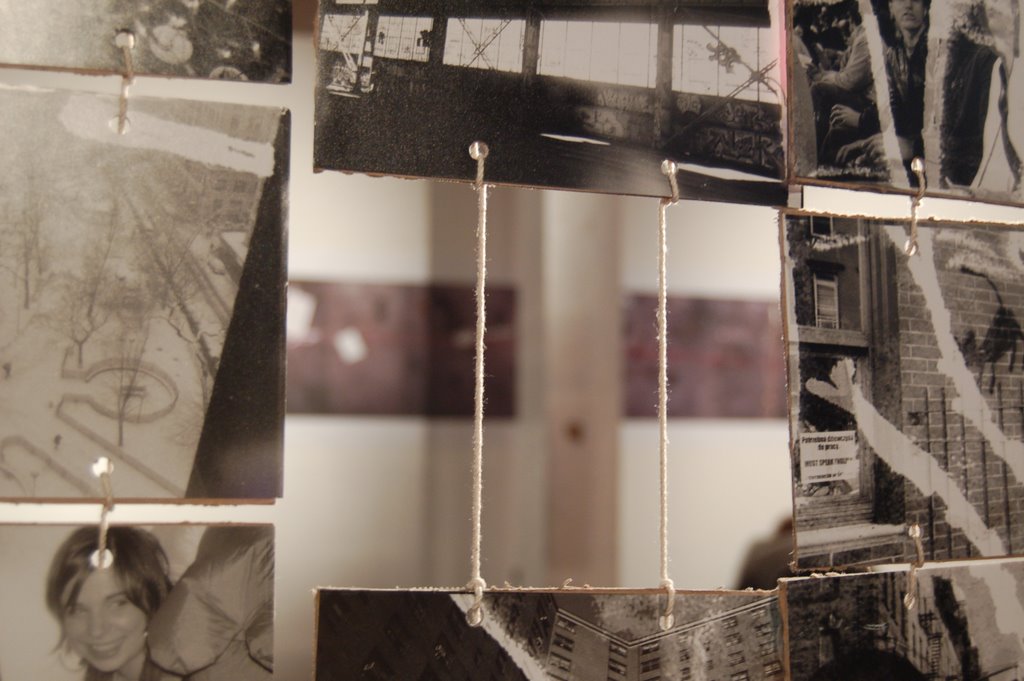
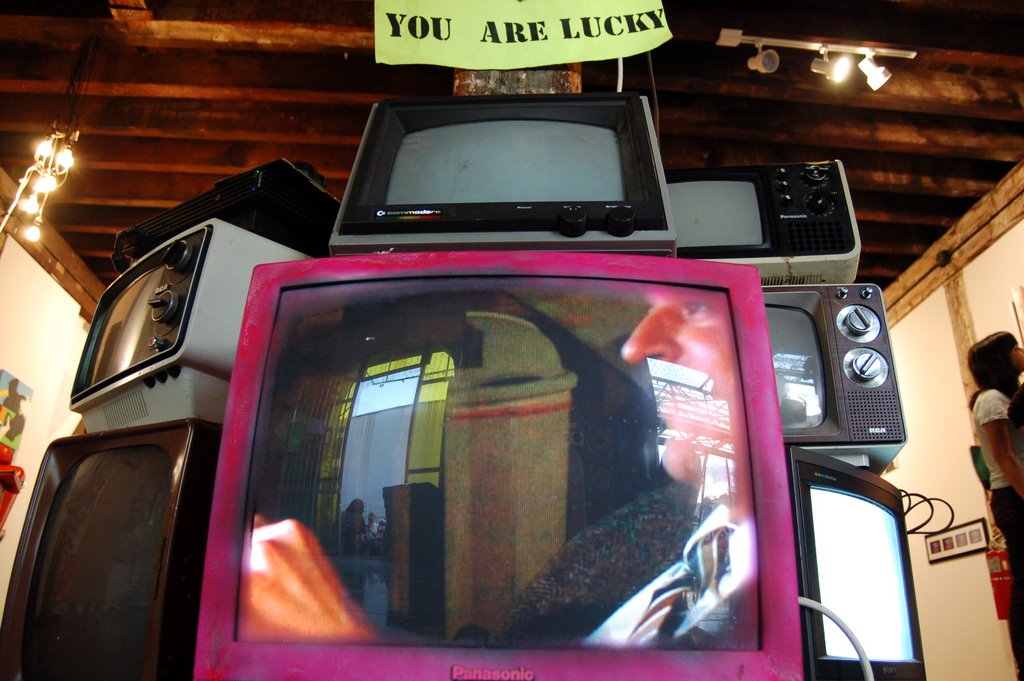
Secret Project Robot is a gallery space located in Monster Island, a converted warehouse building located on what seems to be the only few hundred square feet of ground not earmarked for high-rise development along the Hudson at Kent Avenue, Williamsburg. It houses several art organisations and hosts regular exhibitions and events; last weekend’s art and music festival was one of the best things we’ve been to in Brooklyn. Check out their (strangely antediluvian) website here, and get a sense one of the current shows, a sort of communal art store called cabin comforts, here. The photos below are of some of the other exhibits, including the superb super8 projection at the end of the night, which stretched across three buildings along the waterfront.The striped screen in the second-to-last photo was the result of an artist drawing straight lines of colour on empty super8 reels as they were projected onto the walls; it started as a single wobbly strip of orange and built, within minutes, to what looked like one of the old TV test screens, before turning to a single block of colour; the effect was gorgeous. These pictures don’t do it justice, but they give some idea of the event, I hope.



and lastly (and fittingly)...

Read More...

Internet-savvy Sue

So that’s who was doggedly rooting around these pages from the offices of the London Times for most of last week, going through the archive and leaving little queries about my true identity - almost touching in their never-tried-this-blogging-thing-before bluntness - in the comments section. I could see you, Sue: you'd be surprised at what thorough little bastards these statcounters can be. ISP trackers and all! Anyway, thanks for the half-mention. I'll treasure it. It is to me what vol-au-vents are to Bono.

I'm the "observer", by the way. At last, my proudest moment!

Read More...

Friday, September 22, 2006

"Wasps are the Neo-Nazis of the Insect World"

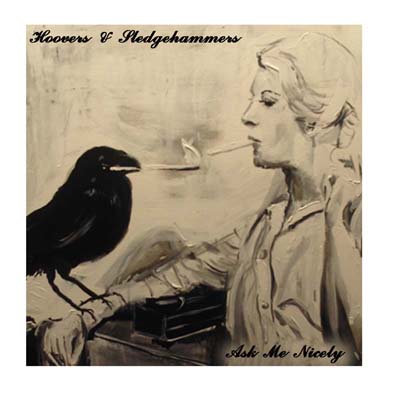
Our friends Ronan & James, aka Hoovers & Sledgehammers, are over from Dublin to play a couple of gigs; it's been fun watching the reaction of punters in Manhattan and Queens to their gentle performances of such hits as "I'll Stab You" and "Fat Fuck". Think a marraige of Glen Hansard and the dead Nazi soprano Elisabeth Schwarzkopf. No, just kidding, don't. Think this video, for their song "Joyridin'". That's how he killed his sister Peg, after all. So a bit of respect...

Read More...

Ardently Desire Away, Your Name's Not Down. Now Get Lost.

Now, hold on. Irish artists, or rather artistes, are just losing the run of their tempers these days, by the sound of things. First Twink, then Bono, and now the wonderful Mannix Flynn? Mannix, you may have heard if you’re in Ireland, is presenting a mysterious piece at this year’s Dublin Theatre Festival, about which the organisers of the festival claim to know relatively little. As described in Saturday’s Irish Times, the piece sounds promising:

Letting Go of That Which You Most Ardently Desire [is] described as an art process whereby members of the public can call a number, enter into a contract based on trust and then be given instructions on how to have a unique experience at one of a number of site-specific locations.


Word reached me from a friend in Dublin this morning, however, that there may be quite a delicate art to getting those elusive instructions. My friend called the number given for Letting Go… and left her details; when her mobile rang later that evening, who was on the other end only Mannix, all ready to give the necessary instructions. Except my friend was in a crowded bar at the time, and the line was bad, and she couldn’t really hear Mannix that well, and had to keep getting him to repeat parts of his “process spiel” so that she could actually work out where to go to take part in the thing. Well, this wasn’t the done thing at all, at all. Obviously, she wasn’t taking the whole process very seriously at all if she was in a bar while waiting for her call to be returned. Obviously, she should have been sitting in a darkened room with all the doors and windows closed, without radio or television, staring expectantly at her mobile, unable to breathe until it rang. Apparently disgusted with her lack of interest (even though she was trying to hear what he was saying), Mannix basically (not to mention allegedly) lost the rag, told her to get lost, and hung up on her.

And this is the problem with the Aosdána funding. For Irish artists, it can’t possibly stretch to the weekly tab in Grogan’s and Anger Management classes with Tony Humphreys. Increase the Cnuas now!!!

Read More...